Customization, renovation, or artisan creation, whatever your project, our leather paints give an object a second life or allow for unique personalization.
Thanks to the variety of products we offer, you can start painting shoes, bags, or wallets, as well as clothing, right away.
Our Ranges of Acrylic Paints
Deco Cuir brings together the best brands on the market for you. These are suitable for both beginners and experienced artisans.
Cova Color (Eco-Flo)
This water-based acrylic paint range is made from an ecological and biodegradable formulation. It notably has a low VOC (Volatile Organic Compound) content.
We recommend these products for vegetable-tanned leather. Note that this paint is opaque if used pure, but it can be diluted with water if you are looking for a "wash" effect.
Angelus
An undisputed reference, Angelus paints are manufactured in the United States. With its water-based and non-toxic base, the range boasts great flexibility. Consequently, it does not crack or flake with movement.
Moreover, you can enjoy various finishes: standard, metallic, pearlescent, neon, or even glitter.
Fiebing’s Acrylic Dye
Fiebing’s Acrylic Dye water-based acrylic paint is very opaque. Thus, it acts almost like a varnish. In addition, it dries quickly while preserving the flexibility of the leather.
This range is dual-purpose, as you can also use it to dye the edges of your creations.
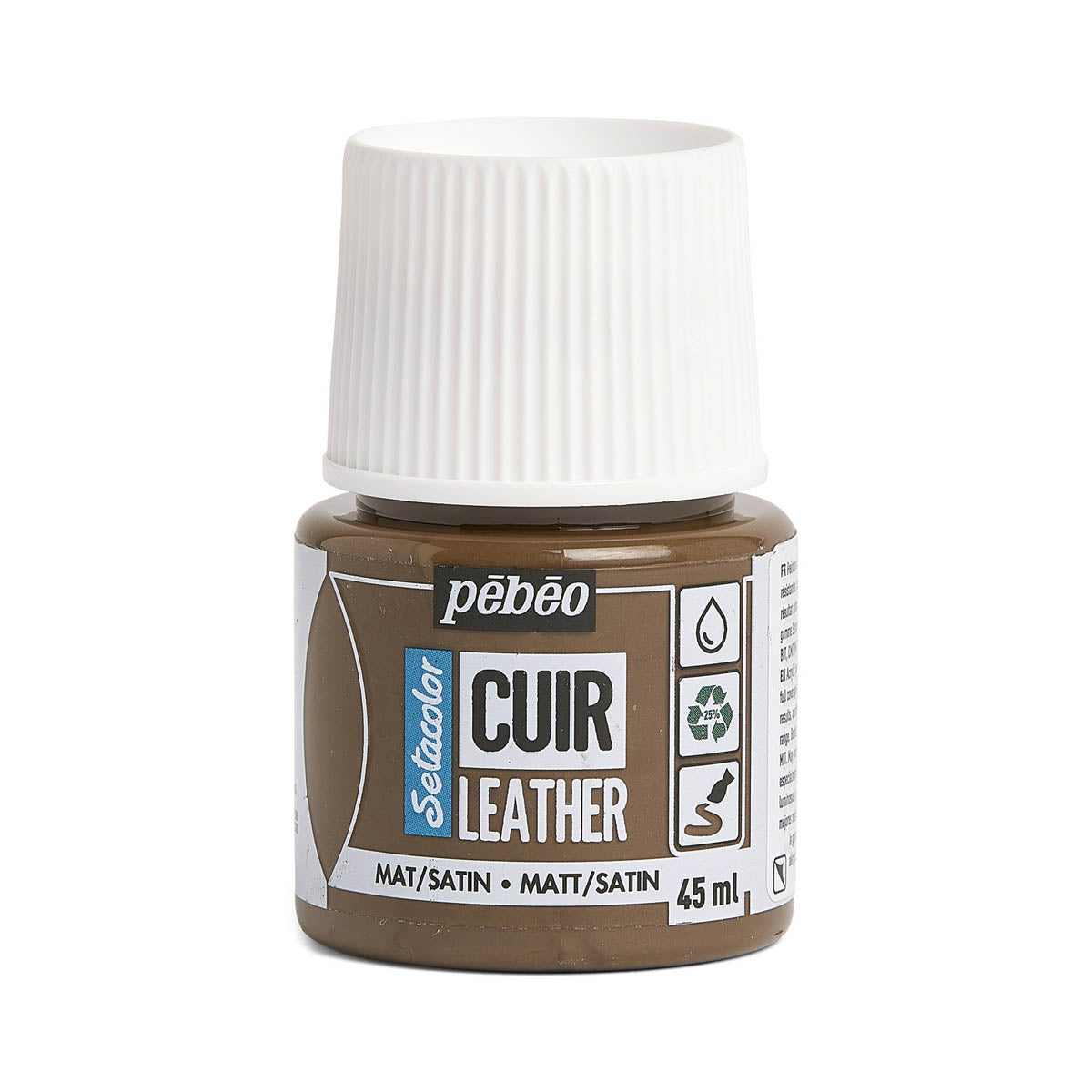
Setacolor (Pébéo)
Made in France and specially designed for leather and faux leather, this range is available in bottles and extra-fine tip markers.
We recommend Setacolor if you are looking for excellent coverage. By applying three thin coats, you can indeed achieve an opaque result. Furthermore, the brand offers a range of specific effects (matte-satin, metallic, duochrome), which allows you to find the paint perfectly suited to your creative project.
Leather Paints: What Are They Used For?
Discover the many creative opportunities offered by the leather paints you will find in this section.
Customizing Shoes and Sneakers
With the Angelus range, personalize your shoes and sneakers for an aesthetic result. Remember to systematically use a deglazer beforehand to break down the (very stubborn) factory finish and ensure good paint adhesion.
If you want to start customizing bags, wallets, or belts, you must first focus on precision. To create lettering or fine patterns, you can purchase a Pébéo Setacolor marker or prefer the Cova Color range for carved patterns on vegetable-tanned leather.
The Advantages of Leather Paint
By acquiring leather paint, you benefit from numerous advantages:
Surface coloring, which does not penetrate the fibers (unlike a classic leather dye)
Strong pigmentation and opacity
Flexibility of acrylic resins
Customization and creation of precise patterns
Possibility to mix shades
Masking small signs of wear
How to Effectively Prepare the Leather Surface?
Before applying your leather paint, it is essential to prepare the material's surface. The objective is to break down the factory finish, open the pores, and degrease. This is a truly essential step to ensure paint adhesion during application.
To do this, prepare the appropriate product, which can be a preparer, stripper, or deglazer. Apply the product with a clean cloth or by using absorbent paper and rubbing lightly.
You must then let the product dry completely before moving on to the leather painting step.
Our Application Tips for a Durable Finish
To obtain a durable result, paint application must follow a few rules. Choose the tool of your choice (soft synthetic brush, sponge, airbrush, or marker), then apply the paint regularly and evenly to avoid any brush marks. In addition, prefer multiple thin coats rather than a single thick coat.
Allow drying time between each coat. We recommend air drying for optimal results.
Leather Care and Paint Setting
To protect your work, a final setting is mandatory. To do this, apply a finishing varnish (finisher, Resolene, or acrylic protective varnish).
Select the visual finish of the varnish that suits you from a matte, satin, or glossy finish. This varnish is important because it protects against scratches, friction, and water through a waterproofing process.
Once you have completed all these steps, clean with a soft cloth and do not use strong chemical solvents or greasy creams, as these products could lift the acrylic paint.